
- Construction machinery
- Agricultural machinery
- Food technology
- Transport vehicles & commercial vehicles
- Metalworking machines & machine tools
- Woodworking machines
- Forklift trucks & industrial trucks
- Automation technology
- Conveyor & drive technology
- Storage technology
- Printing machines & printing presses
- Plastics processing & plastics technology
- Recycling & disposal machines
- Packaging machines
- Compressed air technology
- Measurement & testing technology
- Energy technology
- Chemical & pharmaceutical machines
- Municipal technology
- Cleaning technology
- Process engineering
- Refrigeration technology
- Medical technology
- Glass processing & ceramic processing
- Vacuum technology
- Surface technology
- Motors
- Surplus stock & remaining stock
- Wire processing machines
- Paper processing & film processing
- Textile machinery
- Filling systems & filling technology
- Special machines
- Other machines
- Power tools
- Automotive workshop equipment
- Stone working machines
- Office technology
- Purification technology
- Mail processing machines
- Telecommunications technology & computer technology
Ploughing or cultivating in autumn? When is it still worth using tillage methods that turn the soil over?
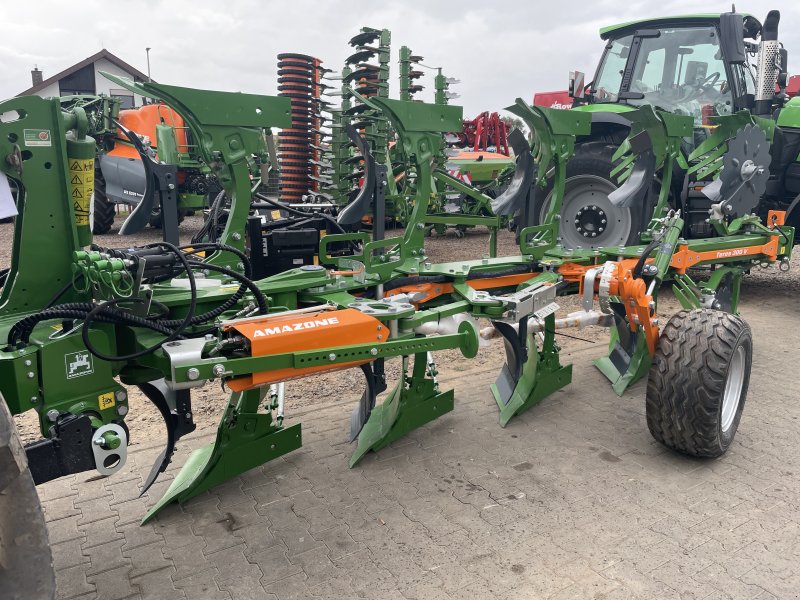
In October, the same question arises again on many farms: should the plough be brought out once more – or will the cultivator suffice? The answer has shifted in recent years. Diesel costs and working hours favour ploughless cultivation, whilst weeds, Fusarium and slugs sometimes argue in favour of ploughing. And since the introduction of GLÖZ 5 and GLÖZ 6, subsidy regulations have also played a part in determining when ploughing is permitted. We have compiled the key figures and rules – so that you can make decisions field by field.
How ploughs and cultivators differ in their effect on the soil
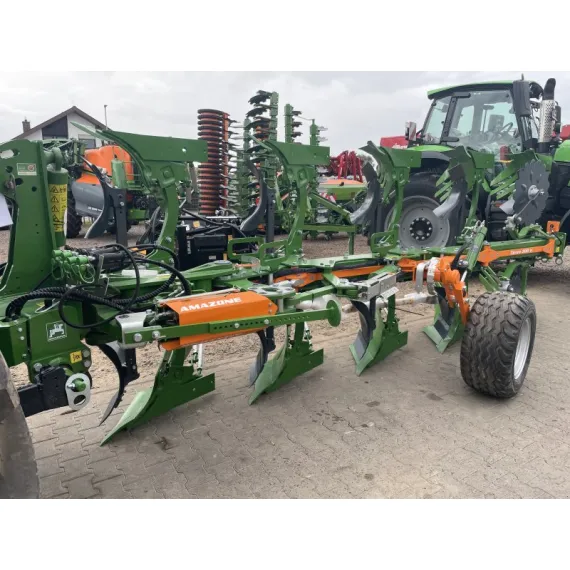 Tillage: Amazone Teres 300, new, year of manufacture 2025 · view listing
The plough turns the soil over: straw, volunteer seeds and weed seeds end up at the bottom, leaving the surface clean. This creates an even seedbed, but it costs diesel, time and soil life. The cultivator loosens and mixes the soil without turning it over. Depending on the coulter type, it works ultra-shallow from around 2 cm (goosefoot coulter), shallow with wing coulters at 6 to 15 cm, or with narrow coulters to a depth of 25 to 35 cm to break up compaction. The short-disc harrow is the quick tool for stubble: Väderstad specifies a working depth of 2 to 12 cm for the Carrier at speeds of 10 to 15 km/h.
Diesel and working time: what the figures tell us
How much diesel the plough actually uses depends heavily on depth, soil type and settings. The ranges from practical experience and trials:
| Method | Fuel consumption | Source |
|---|---|---|
| Plough | 16–30 l/ha | Bauernblatt / LKSH 2020 (based on wood) |
| Cultivator | 8–20 l/ha | Bauernblatt / LKSH 2020 |
| Short-disc harrow in stubble | 6.2–8.6 l/ha at 4.4–5.5 ha/h | BOKU Vienna (Moitzi 2006) |
| Complete process with ploughing, including sowing | 28.2–32.2 l/ha | DLG measurement 2005 (Amazone) |
| Conservation tillage including sowing | 10.7–14.0 l/ha | DLG measurement 2005 (Amazone) |
Two rules of thumb can help with your own calculations: every additional centimetre of working depth costs roughly one litre more of diesel per hectare. And, according to top agrar, a poorly adjusted plough can consume up to 35 per cent more than one that is optimally adjusted. In terms of labour requirements, the Hessian State Agricultural Service cites a saving of up to 40 per cent for ploughless cultivation.
When the plough comes into its own
- Maize before wheat: According to the Bavarian State Office for Agriculture (LfL Bayern), the combination of maize as a preceding crop and non-inversion tillage carries the highest risk of Fusarium. Maize stubble on the surface is the main source of infection. Farmers who do not plough should at least thoroughly shred and incorporate the stubble.
- Weeds: Where there is heavy black grass pressure, ploughing can help – with an average effectiveness of around 69 per cent, although this varies considerably. According to the analysis reported by *top agrar*, regular ploughing every year offers no advantage; targeted use in combination with summer crops is more effective.
- Slugs and mice: Tillage disrupts both. Ploughing combined with good reconsolidation disrupts the slugs’ burrowing routes. However, an intensively mixing cultivator is also effective against field mice: in a trial conducted by the University of Halle, this reduced the number of mouse holes by around 95 per cent.
When cultivators and mulch sowing come out on top
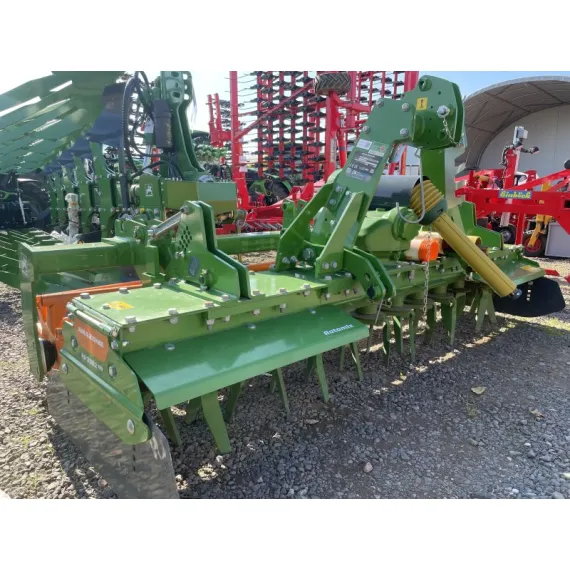 Seedbed preparation after ploughing or cultivating: Amazone KE 3002, new · view advert
- Erosion: Following heavy rain on a slope, an experiment by the LLH Hessen found that 87 per cent of the rainfall ran off after plough-based sowing, compared with just 16 per cent after mulch sowing.
- Soil life: The Saxony State Office found around eight times as many earthworms with conservation tillage or direct sowing as after ploughing. The Bavarian State Office for Agriculture (LfL Bayern) therefore advises reducing the frequency of ploughing.
- Water: Ultra-shallow stubble cultivation breaks the capillary action and retains water in the soil – a real advantage in dry years.
- Work peaks and costs: Less diesel, fewer hours, greater efficiency in the autumn.
- Plough pan: The plough wheel typically compacts and smears the soil to a depth of 25 to 30 cm. Those who plough can avoid this by using on-land ploughs – trials at HTL Ried showed a reduction of up to 6 litres of diesel per hectare compared with ploughing in the furrow.
What you need to bear in mind legally in 2026
Since the CAP reform, it is not only the arable land that matters, but also the erosion scenario. According to the information sheet on cross-compliance for 2026 (StMELF Bavaria), the rule, in simple terms, is as follows:
- GLÖZ 5, K-Water 1 and 2 scenarios: ploughing is prohibited from 1 December to 15 February. After harvest, ploughing is only permitted if sowing takes place before 1 December. In K-Water 2, ploughing is generally not permitted before row crops with a row spacing of at least 45 cm.
- GLÖZ 5, K-Wind: Ploughing is only permitted if sowing takes place before 1 March or is followed immediately by sowing.
- GLÖZ 6, minimum soil cover: At least 80 per cent of arable land must be covered by 31 December. Stubble and mulch also count – provided the land is not ploughed. Anyone who ploughs in autumn must sow immediately (winter crops or catch crops) or include the area under the 20 per cent exemption.
The federal states implement the rules with some exceptions, for example for heavy clay soils. You should therefore always check the guidance note for your federal state and the erosion profile of your fields.
Equipment: What to look for when buying
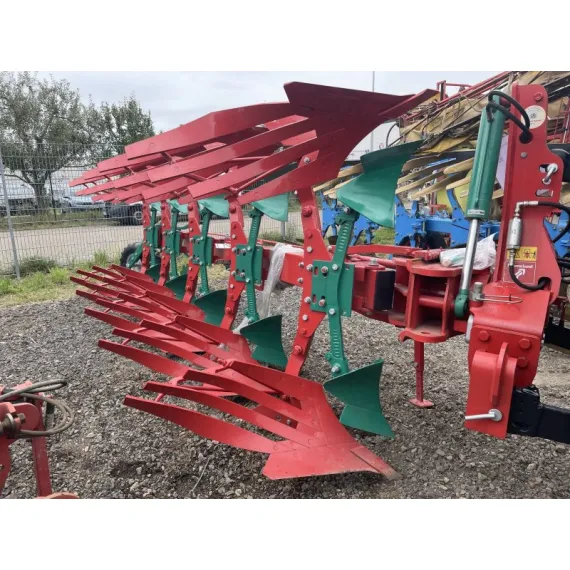 Kverneland LB 100, 5-furrow, new · view listing
- Working width adjustment: On the Variopflug, the working width is adjusted hydraulically from the cab – on the Kverneland Variomat, from 30 to 55 cm per body. This reduces the draught force on difficult sections and adapts the plough to the tractor.
- On-land capability: Anyone wishing to protect their soil and using wide tyres should ensure that the plough can be driven on the land.
- Wear parts: Check the coulters, scraper plates, attachments and tips; for the cultivator, check the coulters and coulter tips; for the disc harrow, check the disc diameters and bearings.
- Stone guard: Check hydraulic or spring-loaded stone guards for proper function and leaks.
- Packer: According to top agrar, a packer costs around 10 to 15 per cent more in terms of power, but ensures reconsolidation – a particular advantage when dealing with soil compaction.
Where to look
On machinery-market.eu you’ll find around 20 ploughs, including new machines such as the Amazone Teres 300 and the Kverneland LB 100 from Petri & Söhne. Mecklenburger Landtechnik offers large variable-width ploughs, such as the Kverneland 6300 S Variomat with 8 shares, the Kverneland 3300 S Variomat, the Gregoire-Besson Voyager S70 Vario or the Lemken Diamant 16 VU.
For ploughless cultivation, it’s worth taking a look at the soil preparation range: short-disc harrows such as the Väderstad Carrier XL 625 with CrossCutter and the Lemken Rubin 10/500, cultivators such as the Lemken Karat 10/600, the Horsch Joker 6 RT disc harrow and, for seedbed preparation, rotary harrows such as the Lemken Zirkon 12. You’ll find the right tractor in the tractors section – read our guide ‘Buying a second-hand tractor’ to find out what to look out for when buying second-hand.
Frequently asked questions
How much diesel does a cultivator save compared to a plough?
That depends heavily on depth, soil type and settings. The Bauernblatt magazine quotes a range of 16 to 30 l/ha for the plough and 8 to 20 l/ha for the cultivator. In the overall process, including sowing, the DLG measured 28 to 32 l/ha with a plough compared with 11 to 14 l/ha with conservation tillage.
Can I still plough in the autumn?
In principle, yes, but with restrictions: in erosion zones K-Wasser 1 and 2, there is a ploughing ban from 1 December to 15 February, and after the harvest, ploughing is only permitted there if sowing takes place before 1 December. Due to GLÖZ 6, sowing must take place immediately after ploughing; otherwise, the area does not count towards the minimum soil cover requirement. The rules of your federal state apply.
Should I plough before sowing wheat following a maize crop?
According to the Bavarian State Office for Agriculture (LfL Bayern), maize as a preceding crop, in combination with non-tillage cultivation, carries the highest risk of Fusarium. It is crucial that the maize stubble is not left lying on the surface: it must either be ploughed under or intensively shredded and incorporated. Direct drilling after maize is the riskiest option.
Does ploughing help against black grass?
Yes, but not reliably: on average, it is around 69 per cent effective, with significant variations. Ploughing every year offers no advantage. A targeted approach combined with summer crops in the crop rotation is more effective.
What is an on-land plough?
With on-land ploughing, the tractor drives with all its wheels on the unploughed soil rather than in the furrow. This avoids the plough pan, allows for wide tyres and, according to trials by HTL Ried, saves up to 6 litres of diesel per hectare.
No posts found
Write a reviewRecent posts
- Fertiliser spreaders: boundary spreading, section control and the requirements of the Fertiliser Ordinance
- Ploughing or cultivating in autumn? When is it still worth using tillage methods that turn the soil over?
- Buying a second-hand tractor: What really matters when it comes to continuously variable transmission (CVT) tractors
machinery-market.eu
The European marketplace for new and used machinery, commercial vehicles and industrial equipment.
Would you like to enquire about a machine?
Please contact the seller directly via the enquiry form in the listing or via the seller profile.
© 2025 - 2026 machinery-market.eu.
machinery-market.eu — the European online marketplace for used and new machinery. On our B2B platform, you’ll find thousands of verified listings from commercial sellers across Europe in the fields of construction equipment, agricultural machinery, food processing equipment, commercial vehicles, machine tools, and specialty equipment.
Our marketplace includes the following machinery and equipment categories, among others: Excavators, mini excavators, mobile excavators, crawler excavators, compact excavators, track excavators, wheel loaders, skid-steer loaders, farm loaders, telescopic loaders, dump trucks, articulated dump trucks, articulated trucks, rollers, tandem rollers, trench rollers, vibratory plates, rammers, compaction equipment, construction compressors, power generators, light towers, aerial work platforms, scissor lifts, telescopic work platforms, forklifts, forklifts, electric forklifts, container handlers, demolition excavators, demolition hammers, drilling rigs, earth rockets, pipe layers, plow layers, snow groomers, high-pressure cleaners, dry ice blasting machines, sandblasting systems, cleaning technology.
In the field of agricultural machinery and forestry equipment: tractors, combine harvesters, forage harvesters, balers, round balers, square balers, plows, cultivators, harrows, seeders, drillers, fertilizer spreaders, field sprayers, crop protection sprayers, trailers, dump trucks, silo trucks, slurry tankers, manure spreaders, front loaders, rear loaders, wood splitters, harvesters, forwarders, forestry mulchers, sawmill machinery, wood chippers, planers.
In the field of food and packaging technology: Packaging machines, labeling machines, filling systems, bottle fillers, conveyor belts, refrigeration systems, freezing systems, baking ovens, deck ovens, cutting machines, kneading machines, dough dividers, mixers, vacuum packaging machines, shrink tunnels, palletizers, robotic cells, CIP systems, pasteurizers.
In the field of machine tools, CNC, and metalworking: CNC lathes, CNC milling machines, machining centers, 5-axis machines, turning centers, grinding machines, cylindrical grinders, surface grinders, drilling machines, column drills, sawing machines, band saws, plasma cutters, laser cutting systems, waterjet systems, press brakes, shear machines, edge grinders, welding robots, robotic cells, 3D printers, generators.
In the commercial vehicles and transport sector: trucks, tractor-trailers, semi-trailers, trailers, low-loaders, dump trucks, refrigerated trucks, garbage trucks, vacuum excavators, vacuum trucks, flatbed trucks, box trucks, pickups, flatbed tarps, containers, swap bodies, roll-off dumpers, skip loaders, water trucks, spray trucks.
We facilitate business transactions in the following sectors: civil engineering, building construction, road construction, earthworks, demolition, recycling, landscaping, gardening and landscaping, agriculture and forestry, logistics, industry, metal construction, wood processing, food production, food processing, packaging industry, printing industry, pharmaceutical industry, construction companies, equipment rental, rental parks, workshop supplies, and blow-in technology.
Our listings reach buyers and sellers from Germany, including the following cities and regions: Berlin, Hamburg, Munich, Cologne, Frankfurt am Main, Stuttgart, Düsseldorf, Leipzig, Dortmund, Essen, Bremen, Dresden, Hanover, Nuremberg, Duisburg, Bochum, Wuppertal, Bielefeld, Bonn, Münster, Karlsruhe, Mannheim, Augsburg, Wiesbaden, Mönchengladbach, Gelsenkirchen, Aachen, Braunschweig, Chemnitz, Kiel, Halle (Saale), Magdeburg, Krefeld, Freiburg im Breisgau, Lübeck, Mainz, Erfurt, Oberhausen, Rostock, Kassel, Hagen, Saarbrücken, Hamm, Mülheim an der Ruhr, Ludwigshafen, Leverkusen, Oldenburg, Osnabrück, Solingen, Heidelberg, Herne, Neuss, Regensburg, Darmstadt, Paderborn, Würzburg, Ingolstadt, Heilbronn, Pforzheim, Göttingen, Bottrop, Reutlingen, Koblenz, Bremerhaven, Recklinghausen, Bergisch Gladbach, Jena, Trier, Erlangen, Moers, Siegen, Hildesheim, Salzgitter, Cottbus, Speyer, Hanhofen, Frankenthal, Kaiserslautern, Landau, Worms, Germersheim, Bad Dürkheim, Neustadt an der Weinstraße, Pirmasens, Zweibrücken, Bingen am Rhein.
Active throughout Europe—including in Austria (Vienna, Salzburg, Graz, Linz, Innsbruck, Klagenfurt), Switzerland (Zurich, Bern, Basel, Geneva, Lausanne, Lucerne, St. Gallen), the Netherlands (Amsterdam, Rotterdam, The Hague, Utrecht, Eindhoven, Tilburg, Groningen), Belgium (Brussels, Antwerp, Ghent, Liège, Bruges, Namur, Charleroi), Luxembourg (Luxembourg City, Esch-sur-Alzette), France (Paris, Marseille, Lyon, Toulouse, Nice, Nantes, Strasbourg, Bordeaux, Lille, Rennes, Le Havre), Italy (Rome, Milan, Naples, Turin, Palermo, Genoa, Bologna, Florence, Bari, Catania, Verona, Venice, Trieste, Padua, Brescia), Spain (Madrid, Barcelona, Valencia, Seville, Zaragoza, Málaga, Bilbao, Murcia, Granada, Alicante, Vigo), Portugal (Lisbon, Porto, Coimbra, Braga, Faro), Poland (Warsaw, Kraków, Łódź, Wrocław, Poznań, Gdańsk, Szczecin, Lublin, Katowice), the Czech Republic (Prague, Brno, Ostrava, Plzeň, Liberec), Slovakia (Bratislava, Košice, Žilina, Nitra), Hungary (Budapest, Debrecen, Szeged, Miskolc, Pécs, Győr), Slovenia (Ljubljana, Maribor, Celje), Croatia (Zagreb, Split, Rijeka, Osijek, Zadar), Romania (Bucharest, Cluj-Napoca, Iași, Timișoara, Constanța, Craiova, Brașov), Bulgaria (Sofia, Plovdiv, Varna, Burgas, Russe), Greece (Athens, Thessaloniki, Patras, Heraklion), Denmark (Copenhagen, Aarhus, Odense, Aalborg), Sweden (Stockholm, Gothenburg, Malmö, Uppsala, Västerås, Örebro), Norway (Oslo, Bergen, Stavanger, Trondheim, Drammen), Finland (Helsinki, Tampere, Turku, Oulu, Espoo), Estonia (Tallinn, Tartu, Narva), Latvia (Riga, Daugavpils, Liepāja), Lithuania (Vilnius, Kaunas, Klaipėda), Ireland (Dublin, Cork, Limerick, Galway), and the United Kingdom (London, Birmingham, Manchester, Glasgow, Liverpool, Leeds, Edinburgh, Cardiff, Belfast, Sheffield, Bristol).
* Unless otherwise stated, all prices are in euros plus the applicable statutory value-added tax. machinery-market.eu acts exclusively as an intermediary for businesses as defined in Section 14 of the German Civil Code (BGB), government agencies, and religious and social institutions. The purchase contract is concluded directly between the seller and the buyer—we act solely as an intermediary.