
- Construction machinery
- Agricultural machinery
- Food technology
- Transport vehicles & commercial vehicles
- Metalworking machines & machine tools
- Woodworking machines
- Forklift trucks & industrial trucks
- Automation technology
- Conveyor & drive technology
- Storage technology
- Printing machines & printing presses
- Plastics processing & plastics technology
- Recycling & disposal machines
- Packaging machines
- Compressed air technology
- Measurement & testing technology
- Energy technology
- Chemical & pharmaceutical machines
- Municipal technology
- Cleaning technology
- Process engineering
- Refrigeration technology
- Medical technology
- Glass processing & ceramic processing
- Vacuum technology
- Surface technology
- Motors
- Surplus stock & remaining stock
- Wire processing machines
- Paper processing & film processing
- Textile machinery
- Filling systems & filling technology
- Special machines
- Other machines
- Power tools
- Automotive workshop equipment
- Stone working machines
- Office technology
- Purification technology
- Mail processing machines
- Telecommunications technology & computer technology
Buying a second-hand tractor: What really matters when it comes to continuously variable transmission (CVT) tractors
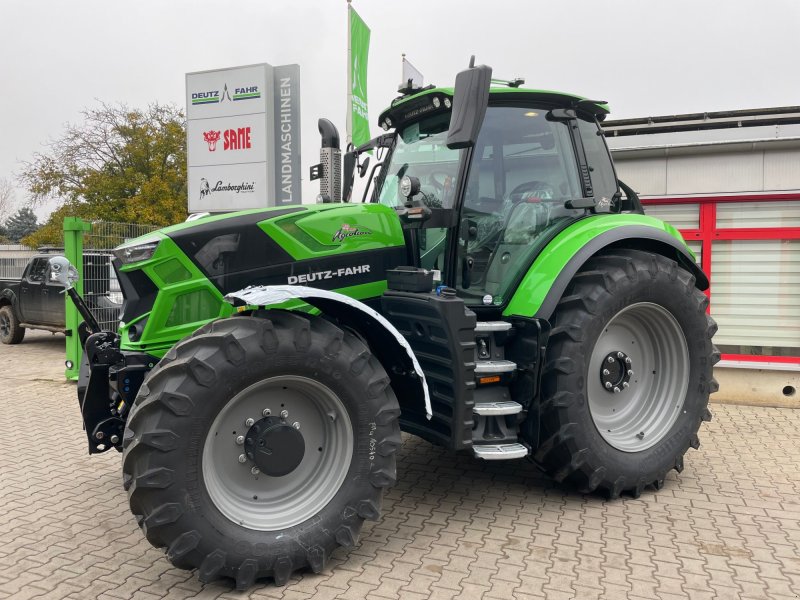
Anyone looking for a second-hand tractor with around 100 PS or more these days will almost inevitably end up with a continuously variable transmission. Vario, TTV, CMATIC, AutoPowr – the names may vary, but the principle is similar, and the convenience is undeniable. When buying second-hand, however, this also means that there is more technology involved in the transmission and exhaust after-treatment systems than you can see during a viewing. We’ll show you what matters – from the driving experience during a test drive to the documents you should ask to see.
What ‘continuously variable’ actually means in a tractor
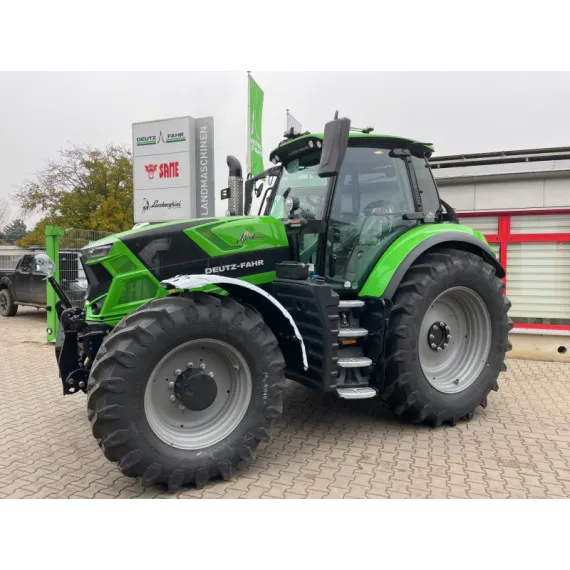 Agrotron 6180 TTV with continuously variable transmission, built in 2025" width="570" height="428" loading="lazy" style="width:100%;height:auto;aspect-ratio:4/3;object-fit:cover;border-radius:6px;display:block;">
A continuously variable tractor transmission no longer has fixed gears. The driver selects the speed, the transmission sets the appropriate gear ratio – whilst keeping the engine within the most economical rev range as far as possible. With Deutz-Fahr, for example, the driver simply sets the target speed using the joystick and then accelerates using the accelerator pedal.
Technically, almost all large tractors operate with what is known as a power split: part of the engine power is channelled via a hydrostatic circuit, the rest via a mechanical one. In this way, the transmission combines the precise controllability of the hydraulics with the high efficiency of the mechanical system. Fendt was the first to introduce this as standard: the Favorit 926 Vario was unveiled at Agritechnica in November 1995 and launched in 1996. Today, every major manufacturer has its own designation:
- Fendt: Vario
- Deutz-Fahr: TTV
- CLAAS: CMATIC
- John Deere: AutoPowr / IVT
- Case IH: CVX · Steyr: CVT · New Holland: Auto Command
- Massey Ferguson: Dyna-VT
Load-shifting or continuously variable – which is right for your farm?
Continuously variable transmission is not automatically better. For pure towing and transport work, a well-maintained power-shift transmission may be the cheaper and simpler choice. The following overview is a rule of thumb based on practical experience, not a precise measurement:
| Criterion | Continuously variable transmission (Vario, TTV, CMATIC …) | Power-shift transmission |
|---|---|---|
| Operation | Preselect speed; the gearbox regulates itself | Shifting in groups and under load |
| Advantages | PTO operation at constant speed, front loader, manoeuvring, varying speeds | Smooth pulling and transport work |
| Technology | More electronics and hydraulics in the drivetrain | Simpler mechanical design |
| Repairs | Troubleshooting usually requires the manufacturer’s diagnostic tool | Also frequently carried out at independent garages |
| Buying second-hand | Service history and diagnostics are particularly important | Keep an eye on clutch and gearbox wear |
You can find an example of the powershift variant in our range with the Deutz-Fahr 6150.4 RV Shift – the same manufacturer, but with a powershift transmission instead of TTV.
Checklist: How to inspect a second-hand continuously variable transmission (CVT) tractor
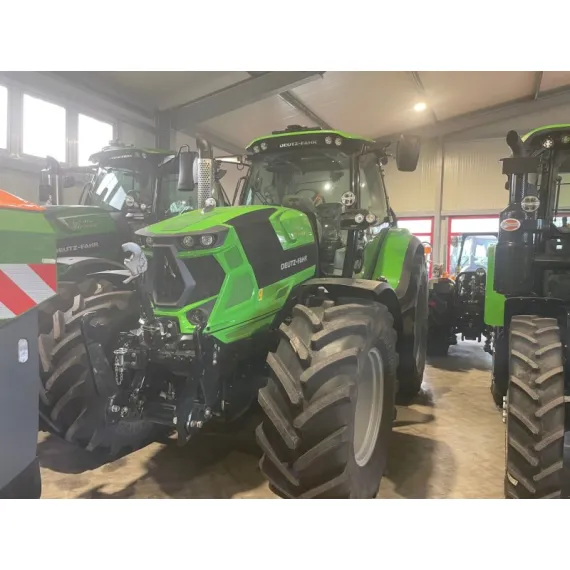 Agrotron 6165 TTV in the workshop" width="570" height="428" loading="lazy" style="width:100%;height:auto;aspect-ratio:4/3;object-fit:cover;border-radius:6px;display:block;">
- Documentation and service history. Ask to see the service log and workshop invoices – particularly the oil changes for the engine, transmission and hydraulics carried out according to the manufacturer’s schedule. With a continuously variable transmission (CVT), a complete service history is worth more than any information in the advert.
- Are the operating hours plausible? Compare the hour meter with your overall impression: the pedals, steering wheel, seat, footrests and cab glazing will reveal how much the machine has been used. Few hours aren’t automatically a good thing – long periods of inactivity can also cause damage.
- Read out the fault memory. Modern tractors store fault codes relating to the transmission, engine and exhaust system. Ask whether the dealer can read these out, and check the display for warning messages during the test drive.
- Test drive when cold and warm. Start off on a slope and under load, reverse several times, manoeuvre slowly, then accelerate briskly to top speed. Listen out for jerking, delays, whistling or humming noises from the gearbox – and note whether the machine behaves differently when cold compared to when warm.
- Exhaust after-treatment. Current Stage V tractors usually feature an oxidation catalyst (DOC), a diesel particulate filter (DPF) and an SCR catalyst with AdBlue. Ask about warning messages, the regeneration of the particulate filter and any repairs to the AdBlue pump or lines.
- Hydraulics and PTO. Raise and hold the rear lift under load, cycle through all control valves, and check for leaks on cylinders and hoses. Run the PTO at all speed settings.
- Axles, four-wheel drive and suspension. Check for play in the steering and steering knuckles; on four-wheel-drive tractors, also check the output flange. The front axle and cab suspension must operate evenly.
- Tyres and cab. Check tread depth, cracks and even wear; in the cab, test the air conditioning, heating, lighting and all controls.
- GPS and activations. Many tractors are offered with a steering system and RTK. Clarify which licences and correction signals are included with the vehicle and whether any subscriptions or activations will be transferred to you.
How many operating hours are acceptable?
There is no fixed limit. A tractor with many, but well-documented, operating hours from a contracting firm may be in better condition than a farm tractor with few hours that has stood unused for years without maintenance. The key factors are maintenance records, the nature of the work (heavy transport, frequent PTO use, front loader operation) and the condition of the machine during the test drive. Use the number of operating hours as a starting point for questions – not as the sole basis for your judgement.
Dealer or private seller, new or used?
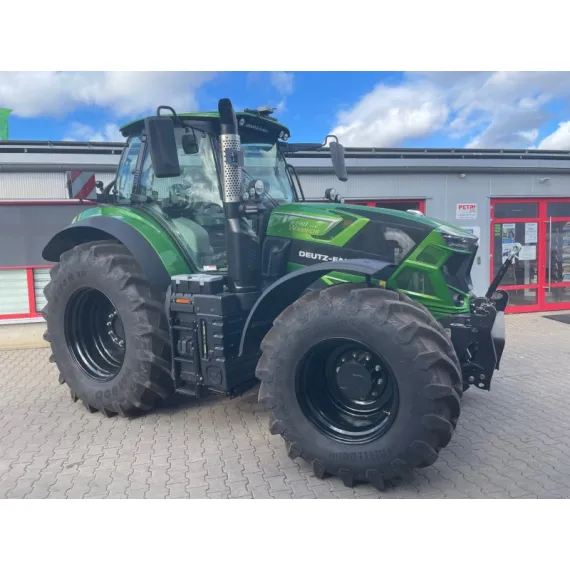 Deutz-Fahr 6190 TTV Warrior, new, year of manufacture 2023 · view listing
At a specialist dealer, you’ll usually get a machine that’s been thoroughly checked, access to diagnostic equipment and a workshop that’s familiar with the model. Ask specifically about the warranty or guarantee and get the agreement in writing. An important practical point: where possible, buy a brand for which spare parts and a workshop are available in your local area – even the best machine is of little use if it is out of action for weeks in the event of a breakdown.
Demonstration machines and stock tractors offer an interim solution: often with just a few hours’ use, some still under warranty, but cheaper than a new tractor at list price. Check on a case-by-case basis what terms still apply. We also have such machines in stock, such as a CLAAS Arion 660 demonstration model with front loader and GPS RTK, or a CLAAS Axion 960 demonstration model.
Where to look
On machinery-market.eu, you’ll currently find around 40 tractors – new, used and as demonstration models – with the year of manufacture, operating hours and photos for each machine. There is a particular focus on Deutz-Fahr continuously variable transmission (CVT) tractors from Petri & Söhne, for example:
- Deutz-Fahr 5105 DS TTV, built in 2023 – a compact continuously variable tractor for farmyards and grassland
- Deutz-Fahr 6125C TTV, built in 2024
- Deutz-Fahr 6190 TTV, year of manufacture 2021
- Deutz-Agrotron 7250 TTV, built in 2014
- Deutz-Fahr Agrotron 8280 TTV, built in 2022 – for large areas and heavy implements
Mecklenburger Landtechnik also offers other continuously variable transmission systems, such as the CLAAS Axion 950 CMATIC, the Steyr 6200 CVT or the John Deere 6230R with CommandPRO. Anyone looking for a new tractor will find, amongst others, the Deutz-Fahr Agrotron 6180 TTV and the Agrotron 6165 TTV. Suitable attachments are available for soil preparation, ploughs, hay turners and rakes.
Frequently asked questions
What is the difference between TTV and Vario?
Both are continuously variable tractor transmissions with a power split: part of the power is transmitted hydrostatically, the rest mechanically. TTV is Deutz-Fahr’s designation, whilst Vario is Fendt’s. There are differences in operation, driving strategies and equipment – but the basic principle is similar.
Is a continuously variable transmission a risk when buying second-hand?
Not necessarily. Continuously variable transmissions have been in series production since the mid-1990s and are now standard in the higher power classes. It is important to ensure that maintenance has been carried out in full in accordance with the manufacturer’s schedule, that the fault memory has been cleared, and that a thorough test drive is carried out both when the engine is cold and when it is warm.
How many operating hours are acceptable for a second-hand tractor?
There is no fixed limit. Maintenance records, the type of use and the condition observed during the test drive are more indicative than the sheer number of hours. Even tractors with very few hours on the clock should be checked for standstill damage.
What does Stage V mean for a tractor?
Stage V is the current EU emissions standard for engines in mobile machinery. Tractors usually comply with this standard by means of an oxidation catalytic converter, a diesel particulate filter and an SCR catalytic converter that uses AdBlue. When buying second-hand, you should ask about warning messages, filter regeneration and repairs to the AdBlue system.
What should I look out for regarding GPS and RTK on a second-hand tractor?
Before purchasing, check which licences and activations are included with the vehicle, whether a correction signal subscription is transferred, and whether the terminal and receiver are included in the scope of delivery.
No posts found
Write a reviewRecent posts
- Fertiliser spreaders: boundary spreading, section control and the requirements of the Fertiliser Ordinance
- Ploughing or cultivating in autumn? When is it still worth using tillage methods that turn the soil over?
- Buying a second-hand tractor: What really matters when it comes to continuously variable transmission (CVT) tractors
machinery-market.eu
The European marketplace for new and used machinery, commercial vehicles and industrial equipment.
Would you like to enquire about a machine?
Please contact the seller directly via the enquiry form in the listing or via the seller profile.
© 2025 - 2026 machinery-market.eu.
machinery-market.eu — the European online marketplace for used and new machinery. On our B2B platform, you’ll find thousands of verified listings from commercial sellers across Europe in the fields of construction equipment, agricultural machinery, food processing equipment, commercial vehicles, machine tools, and specialty equipment.
Our marketplace includes the following machinery and equipment categories, among others: Excavators, mini excavators, mobile excavators, crawler excavators, compact excavators, track excavators, wheel loaders, skid-steer loaders, farm loaders, telescopic loaders, dump trucks, articulated dump trucks, articulated trucks, rollers, tandem rollers, trench rollers, vibratory plates, rammers, compaction equipment, construction compressors, power generators, light towers, aerial work platforms, scissor lifts, telescopic work platforms, forklifts, forklifts, electric forklifts, container handlers, demolition excavators, demolition hammers, drilling rigs, earth rockets, pipe layers, plow layers, snow groomers, high-pressure cleaners, dry ice blasting machines, sandblasting systems, cleaning technology.
In the field of agricultural machinery and forestry equipment: tractors, combine harvesters, forage harvesters, balers, round balers, square balers, plows, cultivators, harrows, seeders, drillers, fertilizer spreaders, field sprayers, crop protection sprayers, trailers, dump trucks, silo trucks, slurry tankers, manure spreaders, front loaders, rear loaders, wood splitters, harvesters, forwarders, forestry mulchers, sawmill machinery, wood chippers, planers.
In the field of food and packaging technology: Packaging machines, labeling machines, filling systems, bottle fillers, conveyor belts, refrigeration systems, freezing systems, baking ovens, deck ovens, cutting machines, kneading machines, dough dividers, mixers, vacuum packaging machines, shrink tunnels, palletizers, robotic cells, CIP systems, pasteurizers.
In the field of machine tools, CNC, and metalworking: CNC lathes, CNC milling machines, machining centers, 5-axis machines, turning centers, grinding machines, cylindrical grinders, surface grinders, drilling machines, column drills, sawing machines, band saws, plasma cutters, laser cutting systems, waterjet systems, press brakes, shear machines, edge grinders, welding robots, robotic cells, 3D printers, generators.
In the commercial vehicles and transport sector: trucks, tractor-trailers, semi-trailers, trailers, low-loaders, dump trucks, refrigerated trucks, garbage trucks, vacuum excavators, vacuum trucks, flatbed trucks, box trucks, pickups, flatbed tarps, containers, swap bodies, roll-off dumpers, skip loaders, water trucks, spray trucks.
We facilitate business transactions in the following sectors: civil engineering, building construction, road construction, earthworks, demolition, recycling, landscaping, gardening and landscaping, agriculture and forestry, logistics, industry, metal construction, wood processing, food production, food processing, packaging industry, printing industry, pharmaceutical industry, construction companies, equipment rental, rental parks, workshop supplies, and blow-in technology.
Our listings reach buyers and sellers from Germany, including the following cities and regions: Berlin, Hamburg, Munich, Cologne, Frankfurt am Main, Stuttgart, Düsseldorf, Leipzig, Dortmund, Essen, Bremen, Dresden, Hanover, Nuremberg, Duisburg, Bochum, Wuppertal, Bielefeld, Bonn, Münster, Karlsruhe, Mannheim, Augsburg, Wiesbaden, Mönchengladbach, Gelsenkirchen, Aachen, Braunschweig, Chemnitz, Kiel, Halle (Saale), Magdeburg, Krefeld, Freiburg im Breisgau, Lübeck, Mainz, Erfurt, Oberhausen, Rostock, Kassel, Hagen, Saarbrücken, Hamm, Mülheim an der Ruhr, Ludwigshafen, Leverkusen, Oldenburg, Osnabrück, Solingen, Heidelberg, Herne, Neuss, Regensburg, Darmstadt, Paderborn, Würzburg, Ingolstadt, Heilbronn, Pforzheim, Göttingen, Bottrop, Reutlingen, Koblenz, Bremerhaven, Recklinghausen, Bergisch Gladbach, Jena, Trier, Erlangen, Moers, Siegen, Hildesheim, Salzgitter, Cottbus, Speyer, Hanhofen, Frankenthal, Kaiserslautern, Landau, Worms, Germersheim, Bad Dürkheim, Neustadt an der Weinstraße, Pirmasens, Zweibrücken, Bingen am Rhein.
Active throughout Europe—including in Austria (Vienna, Salzburg, Graz, Linz, Innsbruck, Klagenfurt), Switzerland (Zurich, Bern, Basel, Geneva, Lausanne, Lucerne, St. Gallen), the Netherlands (Amsterdam, Rotterdam, The Hague, Utrecht, Eindhoven, Tilburg, Groningen), Belgium (Brussels, Antwerp, Ghent, Liège, Bruges, Namur, Charleroi), Luxembourg (Luxembourg City, Esch-sur-Alzette), France (Paris, Marseille, Lyon, Toulouse, Nice, Nantes, Strasbourg, Bordeaux, Lille, Rennes, Le Havre), Italy (Rome, Milan, Naples, Turin, Palermo, Genoa, Bologna, Florence, Bari, Catania, Verona, Venice, Trieste, Padua, Brescia), Spain (Madrid, Barcelona, Valencia, Seville, Zaragoza, Málaga, Bilbao, Murcia, Granada, Alicante, Vigo), Portugal (Lisbon, Porto, Coimbra, Braga, Faro), Poland (Warsaw, Kraków, Łódź, Wrocław, Poznań, Gdańsk, Szczecin, Lublin, Katowice), the Czech Republic (Prague, Brno, Ostrava, Plzeň, Liberec), Slovakia (Bratislava, Košice, Žilina, Nitra), Hungary (Budapest, Debrecen, Szeged, Miskolc, Pécs, Győr), Slovenia (Ljubljana, Maribor, Celje), Croatia (Zagreb, Split, Rijeka, Osijek, Zadar), Romania (Bucharest, Cluj-Napoca, Iași, Timișoara, Constanța, Craiova, Brașov), Bulgaria (Sofia, Plovdiv, Varna, Burgas, Russe), Greece (Athens, Thessaloniki, Patras, Heraklion), Denmark (Copenhagen, Aarhus, Odense, Aalborg), Sweden (Stockholm, Gothenburg, Malmö, Uppsala, Västerås, Örebro), Norway (Oslo, Bergen, Stavanger, Trondheim, Drammen), Finland (Helsinki, Tampere, Turku, Oulu, Espoo), Estonia (Tallinn, Tartu, Narva), Latvia (Riga, Daugavpils, Liepāja), Lithuania (Vilnius, Kaunas, Klaipėda), Ireland (Dublin, Cork, Limerick, Galway), and the United Kingdom (London, Birmingham, Manchester, Glasgow, Liverpool, Leeds, Edinburgh, Cardiff, Belfast, Sheffield, Bristol).
* Unless otherwise stated, all prices are in euros plus the applicable statutory value-added tax. machinery-market.eu acts exclusively as an intermediary for businesses as defined in Section 14 of the German Civil Code (BGB), government agencies, and religious and social institutions. The purchase contract is concluded directly between the seller and the buyer—we act solely as an intermediary.